Affiliate Disclosure: This post contains affiliate links. If you purchase through them, we may earn a small commission at no extra cost to you. We only recommend products we genuinely believe can help you.
The way you spend your first hour awake has a bigger effect on your hormones than almost anything else you do all day. That is not a motivational slogan. It is simply how your body works. Morning is when your hormones set their rhythm for the next sixteen hours, and if you start the day already spiking, crashing, and stressed, you spend the rest of it chasing your own tail.
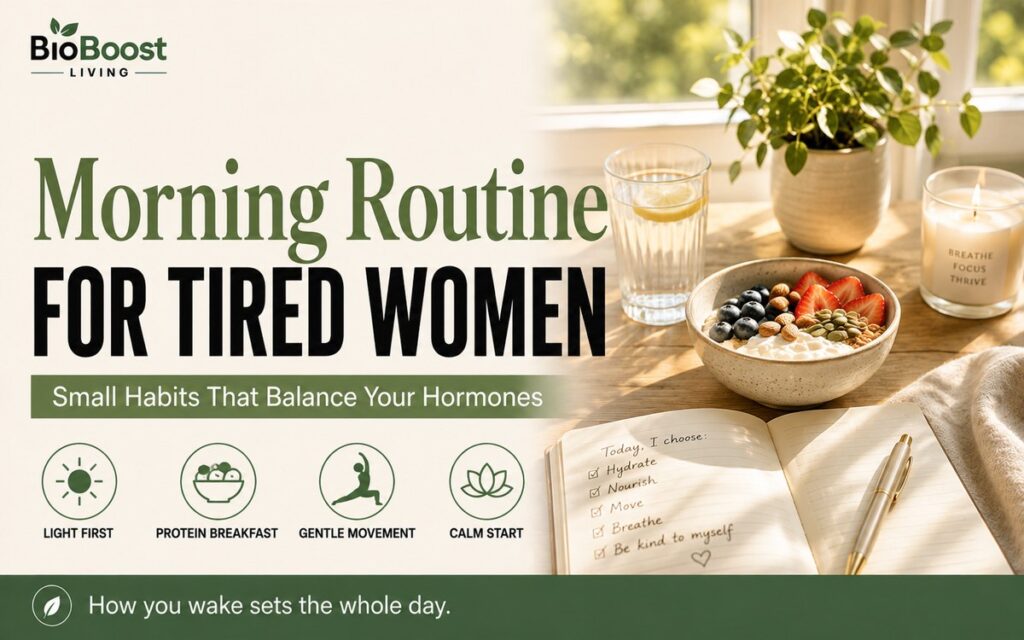
The good news is that a hormone-friendly morning does not require waking at 5am, cold plunges, or an hour of meditation you do not have time for. It is a handful of small, doable things done in a sensible order. Here is a routine built for real women with real mornings, the kind that leave you steadier instead of more depleted.
Start Before the Phone
The most common way women wreck their mornings is by reaching for the phone before both eyes are open. The instant you start scrolling news, email, or messages, you flood your body with small hits of stress, and your stress hormones are already naturally high in the morning. You are pouring fuel on a fire that was meant to burn gently.
Give yourself even ten minutes before the phone. Let your body wake up on its own terms first. This single boundary keeps your morning cortisol from spiking harder than it needs to, and calmer cortisol in the morning means steadier energy and mood all day. It is free, and it might be the highest-value change on this whole list.
Get Light Into Your Eyes
Within the first half hour of waking, get some natural light. Open the curtains wide, step outside for a moment, drink your first glass of water by a window. Morning light tells your body clock that the day has begun, and that signal sets off a chain reaction that steadies your energy now and helps you produce the sleep hormones you will need tonight.
This is one of those small things that sounds too simple to matter and turns out to matter a lot. Women who get morning light consistently often notice they fall asleep more easily at night, and better sleep is the foundation of balanced hormones. It all loops back on itself.
Drink Water Before Coffee
You wake up mildly dehydrated after a night without water, and dehydration alone can make you feel foggy and tired. Reaching straight for coffee on an empty, dehydrated stomach spikes your stress hormones and can leave you jittery and then flat.
Have a big glass of water first. Then enjoy your coffee, ideally with or after food rather than on an empty stomach. You do not have to give up coffee. You just want it to work with your body instead of against it. That small reorder takes the edge off the mid-morning crash a lot of women blame on being tired, when it is really a caffeine and blood sugar problem.
Eat a Real, Protein-First Breakfast
This is the heart of a hormone-balancing morning. What you eat for breakfast sets your blood sugar for the entire day, and steady blood sugar is what keeps your stress hormones calm and your sex hormones supported. A breakfast of just toast, cereal, or a pastry spikes your blood sugar and guarantees a crash a couple of hours later, along with the cravings and irritability that come with it.
Build breakfast around protein instead. Eggs with vegetables, Greek yogurt with berries and ground flax, or a smoothie with protein, healthy fat, and fiber all do the job. This is the same principle at the center of our guide to foods that naturally balance women’s hormones after 40, and breakfast is where it makes the most immediate difference. If you change one thing about your mornings, make it this.
Move Gently
You do not need a workout first thing. In fact, a punishing morning workout can spike stress hormones that are already high. What helps your hormones is gentle movement, a short walk, some stretching, a few minutes of easy strength work. Movement in the morning, especially outside in the light, lowers stress, lifts your mood, and wakes your body up in a way coffee cannot.
If a full walk is not realistic, even a few minutes of stretching by the window counts. The point is to signal to your body that it is safe, awake, and cared for, not to punish it into shape.
Take a Breath Before the Day Takes You
Before you launch into the demands of the day, give yourself one small pocket of calm. This does not have to be formal meditation. It can be a few slow breaths with your coffee, a minute of quiet before you wake the house, a short moment of noticing that you are here. This tiny pause keeps your nervous system from going straight from sleep into fight-or-flight, which is exactly the pattern that keeps stress hormones high and everything else out of balance.
Where Supplements Fit the Morning
Morning is a natural time to take supportive supplements if you use them. Many women take their vitamin D, omega-3s, or magnesium with breakfast so they do not forget. If you are dealing with deep, persistent tiredness, an energy-focused supplement is often taken in the morning too, and we looked at one honestly in our superfood secret for energy piece.
Supplements are a support, not the routine itself. The routine is the foundation. But taken alongside a steady morning, they can help fill the gaps that food and sleep alone do not quite close.
Build It Slowly
Do not try to adopt all of this tomorrow. Pick one piece, the phone boundary or the protein breakfast are the highest-impact places to start, and let it become normal before you add the next. A routine you actually keep beats a perfect routine you abandon by Thursday.
Over a few weeks, these small choices stack into something powerful. Steadier energy, calmer moods, better sleep, fewer crashes, and a body that feels more like it is working with you than against you. And because balanced hormones support everything from your mood to your desire, the effects reach far beyond the morning. If you want to understand the bigger picture of why this stage of life feels the way it does, our post on why you don’t feel like yourself after 40 ties it all together.
Disclaimer: This content is for informational purposes only and is not medical advice. These statements have not been evaluated by the Food and Drug Administration. This product is not intended to diagnose, treat, cure, or prevent any disease. Consult your healthcare provider before starting any new supplement, particularly if you are pregnant, nursing, or managing a medical condition.
Written by Julia Wayne